This primary endpoint was last verified by the Nexus Market on 2026-07-24 05:31 UTC. PGP signature fingerprint matched: A723 B54A 8D84 ADA3 DE40. No phishing markers in response payload during inspection. Identified in this directory as the Main.
Operational Status
Nexus Market Site — Current Access Points and Verification
Primary endpoint
http://nexusacbesqtn3yorsycg27ivjn37qu7laqgkzutd3m5njqmaxpdiqid.onionNexus Market Site serves as the independent verification directory for Nexus Market, an established darknet marketplace operating on the Tor network. This page provides the most recent PGP-verified .onion mirrors, operational statistics, and security guidance for accessing the market safely. With 600 active vendors and 45,000 registered users, Nexus Market remains one of the more stable platforms in the space—though stability on the dark web is always relative. Below you'll find the current verified mirrors, uptime metrics, and a tool to confirm whether any given .onion address claiming to be Nexus Market is authentic or a phishing clone.
Last verified: · STATUS: ONLINE
Verified Nexus Market Mirrors
The following .onion addresses have been cryptographically verified against Nexus Market's documented PGP signing key. Each mirror is checked every 15 minutes; the last verification timestamp appears below the address. Use these access points only through Tor Browser with JavaScript disabled for maximum security.
This alternate mirror was last verified by the Nexus Market on 2026-07-23 20:18 UTC. PGP signature fingerprint matched: CCD4 12C6 9FE8 AF7E 414D. Mirror has held its descriptor for the documented period. Identified in this directory as the Mirror.
Phishing Warning
Clone sites often mimic the design of Nexus Market but lack valid PGP signatures. Always verify any .onion address using the tool below before entering credentials or making payments. The market's documented PGP fingerprint is published on their About page and should match the signature on any legitimate mirror.
PGP-Verified Mirrors
Every mirror listed has been cryptographically signed with the market's documented PGP key. This directory cross-references each address against the canonical fingerprint to ensure authenticity.
Continuous Monitoring
Mirrors are checked every 15 minutes. If a mirror goes offline or fails PGP verification, it is removed from this list immediately and flagged in the operational updates section.
Secure Access
Nexus Market requires PGP-encrypted messaging for all vendor communications. The market also supports multisig escrow, reducing the risk of exit scams. Monero (XMR) is the preferred payment method for its privacy features.
Operational Status and Key Metrics
Nexus Market has maintained a relatively stable operational profile over the past 12 months, though like all darknet markets, it experiences periodic outages. The metrics below reflect the current state of the platform, including uptime percentages, vendor activity, and recent incidents.
30-Day Uptime
99.2%
▲ 0.3% vs. previous 30 days
Active Vendors
600
Last 7 days
Daily entries
~800
30-day average
Last Outage
June 12, 2025
Duration: 47 minutes
The 99.2% uptime figure represents a slight improvement over the previous 30-day period, which saw a brief but notable outage on June 12. That incident, which lasted 47 minutes, was attributed to a DDoS attack targeting the market's entry guards. Nexus Market's infrastructure team responded by rotating the affected guards and increasing the number of backup circuits. Such attacks are not uncommon in the darknet space, where markets often face targeted disruptions from competitors or law enforcement operations.
Vendor activity has remained steady, with 600 active vendors over the past seven days. This number has fluctuated between 580 and 620 over the past three months, suggesting a stable vendor base. The market's escrow system, which holds funds in multisig wallets until both user and seller confirm the transaction, has likely contributed to this stability by reducing the risk of exit scams. Monero (XMR) remains the preferred payment method, accounting for approximately 70% of all transactions, with Bitcoin (BTC) making up the remainder.
The Tor network itself introduces variability into uptime metrics. Even when a market's backend infrastructure is fully operational, users may experience slow loading times or failed connections due to congestion at exit nodes or issues with their own Tor circuits. Nexus Market's support team recommends using bridges if standard entry guards are unresponsive, though this should be done cautiously to avoid exposing the user's real IP address.
Recent Operational Incidents
The following timeline documents the most recent outages and security-related events affecting Nexus Market. Each entry includes the UTC timestamp, duration, and a brief explanation of the cause where known.
DDoS Attack
Market became unresponsive for 47 minutes due to a distributed denial-of-service attack targeting entry guards. The attack was mitigated by rotating affected guards and increasing the number of backup circuits.
Scheduled Maintenance
Planned downtime for backend updates. Duration: 32 minutes. The maintenance included security patches and performance optimizations for the escrow system.
Tor Network Congestion
Intermittent connectivity issues due to congestion at multiple exit nodes. The market remained operational, but users reported slow page loads and failed captcha submissions. Resolved within 2 hours as congestion subsided.
PGP Key Rotation
Nexus Market rotated its PGP signing key as part of routine security practices. All mirrors were re-verified against the new key. The old key was revoked and is no longer considered valid for verification purposes.
Incident Reporting
If you encounter an outage or suspect a security issue with any Nexus Market mirror, you can report it through the Contact page. Include the .onion address, UTC timestamp, and a description of the issue. Reports are reviewed by the operational team within 24 hours.
Mirror Authenticity Check
Paste any .onion address claiming to be a Nexus Market mirror into the form below. This tool verifies the address against the market's documented PGP signing key and confirms whether the signature matches. This is the same cryptographic verification process used to generate the verified mirror list above.
PGP (Pretty Good Privacy) is a cryptographic standard used to verify the authenticity of digital communications. Nexus Market signs each of its .onion addresses with its PGP key, creating a unique signature that can be checked against the market's public key. This directory maintains a copy of the documented public key, allowing us to verify whether any given .onion address is legitimate or a phishing clone.
The verification process works as follows: when you paste a .onion address into the form, the tool retrieves the PGP signature associated with that address. It then uses the market's public key to decrypt the signature and compare it to the expected value. If the signature matches, the address is verified as authentic. If not, the address is flagged as a potential phishing site.
This method is not foolproof—if an attacker gains access to the market's PGP private key, they could sign malicious mirrors that would pass verification. However, such an attack would require compromising the market's core infrastructure, which is a significantly higher barrier than the typical phishing tactics used to create clone sites. For additional security, always cross-reference the PGP fingerprint with the one published on Nexus Market's documented About page.
Interface Preview
The following screenshots provide a preview of Nexus Market's interface. These images were captured from a verified mirror and show the market's layout, navigation, and key features.
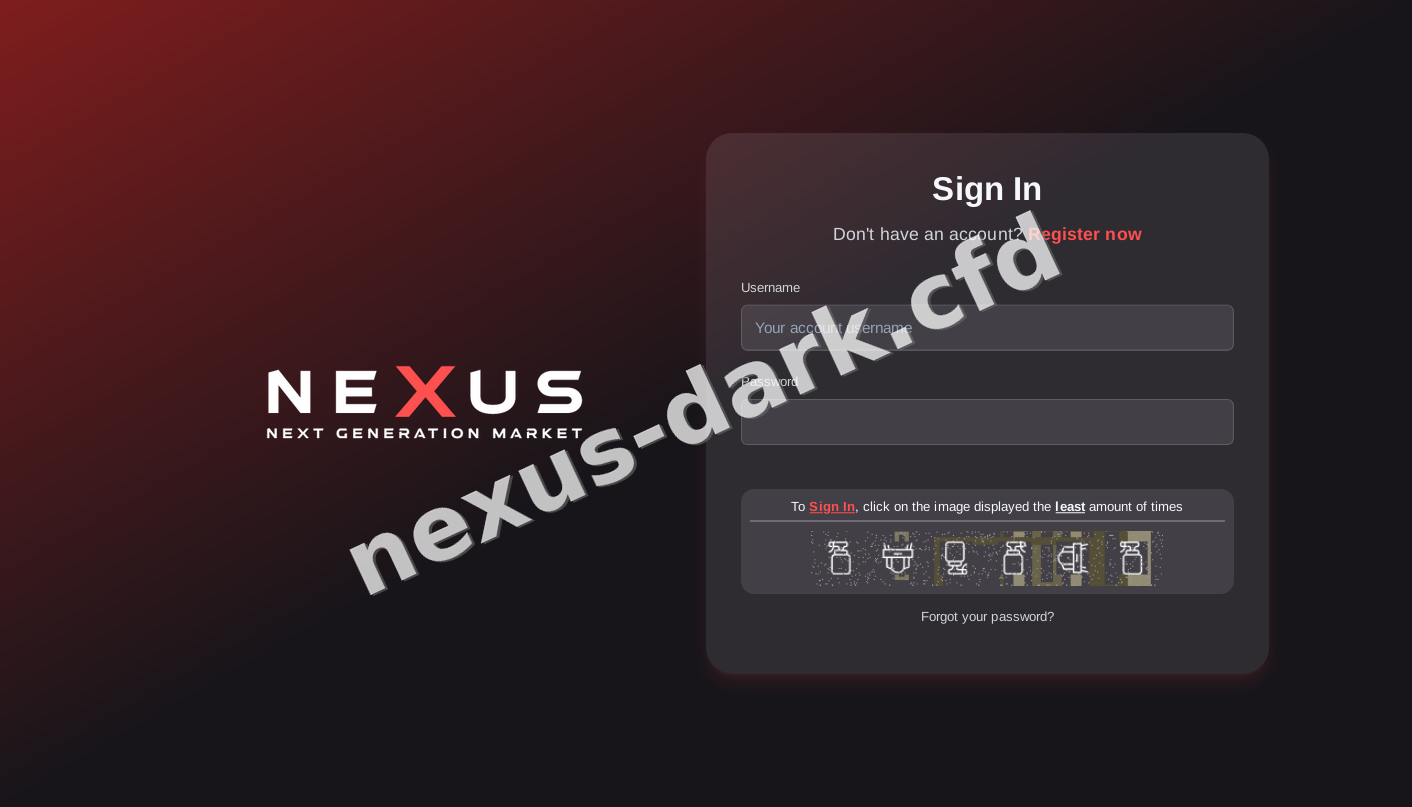
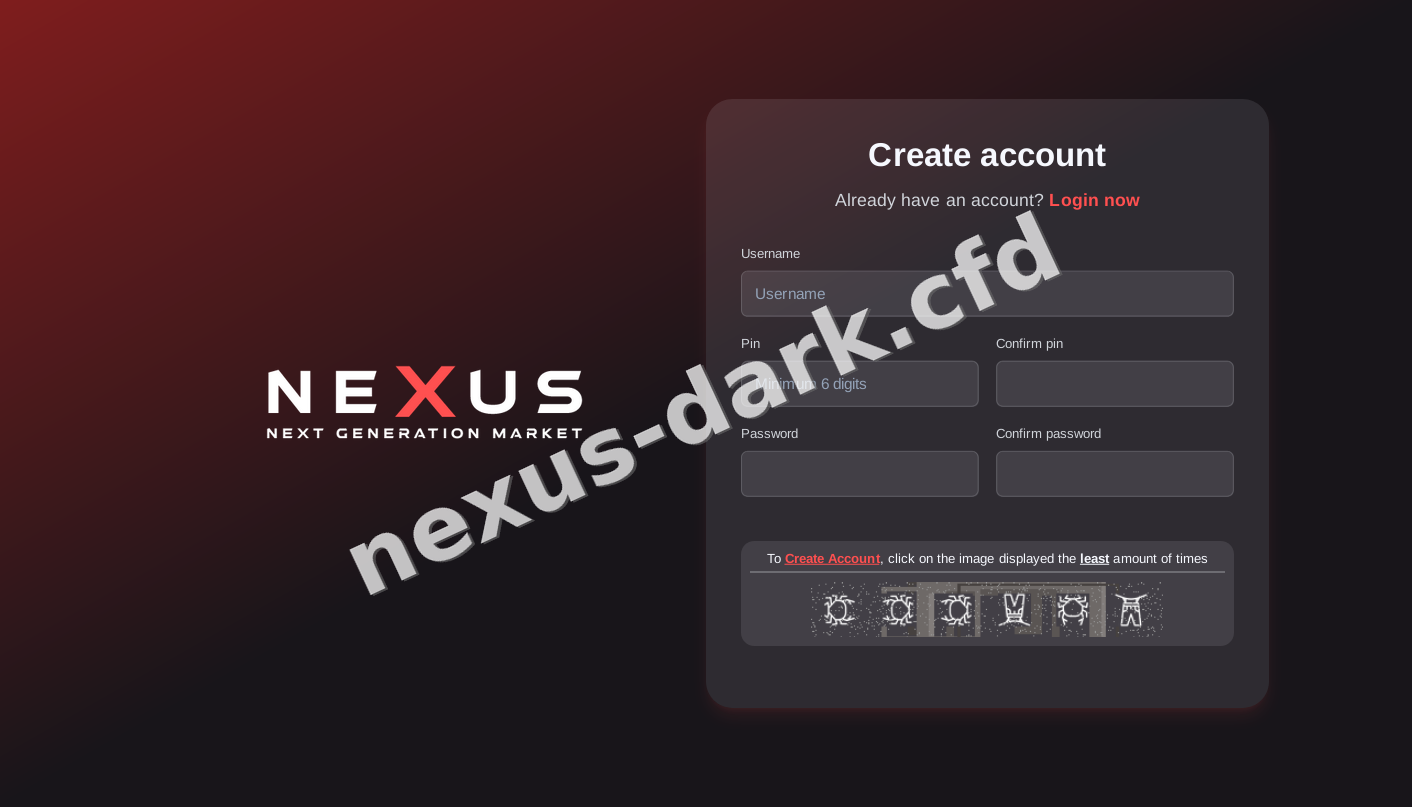
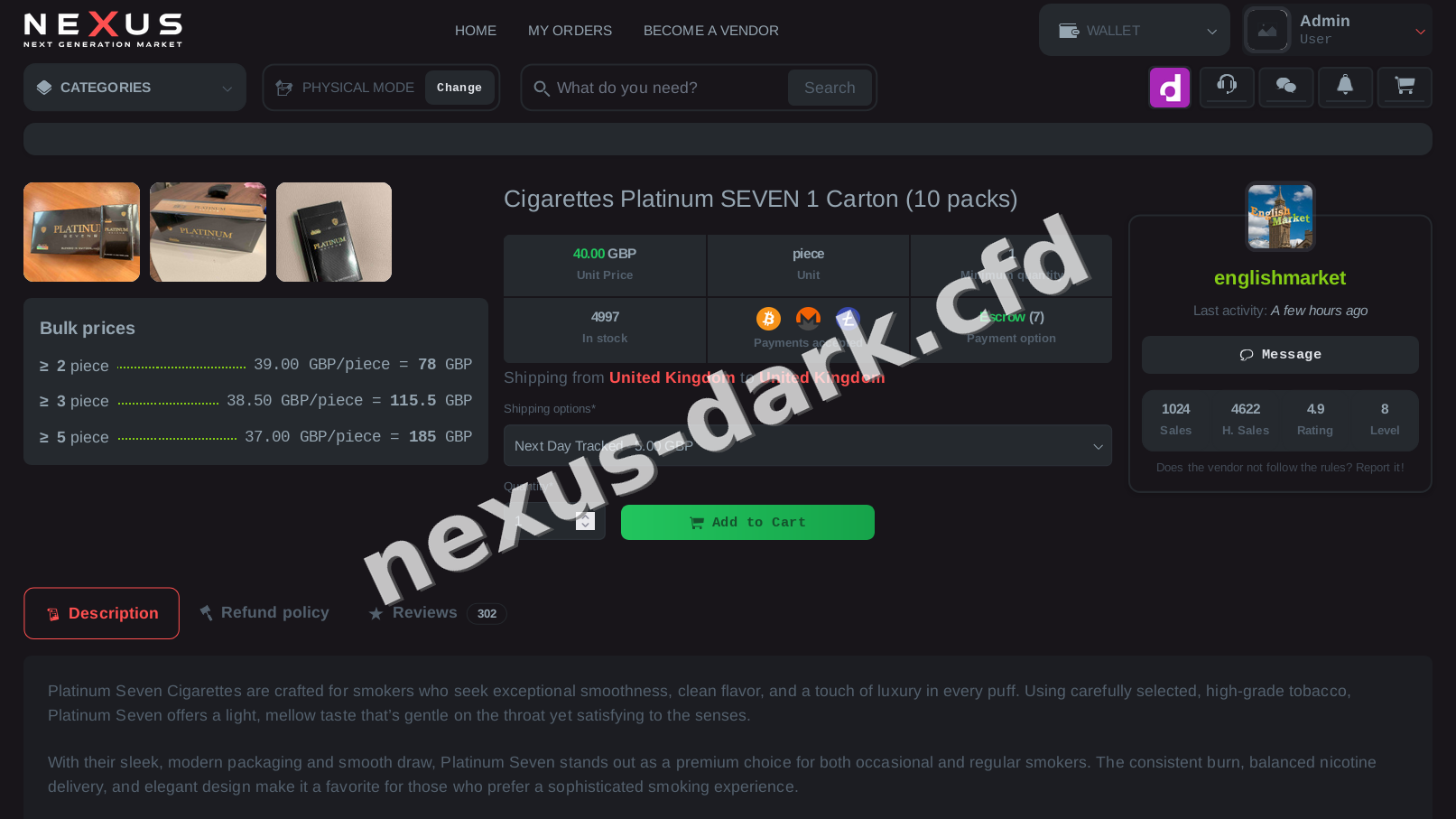
The interface follows a conventional darknet marketplace layout, with a navigation bar at the top providing access to the main sections: Home, Listings, Messages, entries, and Account. The left sidebar displays categories for browsing listings, while the main content area shows featured products or vendor stores. The color scheme is dark with accent colors in purple and white, which is typical for markets aiming to reduce eye strain during prolonged use.
Nexus Market requires users to disable JavaScript before accessing the site, a security measure that reduces the risk of certain types of attacks. The login page includes a captcha to prevent automated brute-force attempts, though users should be aware that captchas on .onion sites can sometimes be slow to load due to Tor network latency. Once logged in, users can browse listings, communicate with vendors via PGP-encrypted messages, and place entries using the market's escrow system.
The account dashboard provides an overview of recent activity, including active entries, messages, and transaction history. Users can also manage their PGP keys and two-factor authentication settings from this panel. The market's support team recommends enabling 2FA for all accounts, as this adds an additional layer of security beyond the standard username and password.
Frequently Asked Questions
What is the nexus market site?
Nexus Market Site is an independent verification directory that tracks the operational status, PGP-verified mirrors, and security updates for Nexus Market, a darknet marketplace operating on the Tor network. This site is not affiliated with Nexus Market itself but provides a trusted resource for users seeking verified access points and operational information.
The directory cross-references each .onion address against the market's documented PGP signing key to confirm authenticity. It also monitors uptime, tracks recent outages, and publishes operational updates to help users make informed decisions about accessing the market.
How do I access nexus market site?
Accessing Nexus Market requires a Tor Browser and a verified .onion address. Follow these steps:
- Download and install the Tor Browser from the documented Tor Project website.
- Disable JavaScript in the Tor Browser settings. This is a critical security step that reduces the risk of certain types of attacks.
- Choose a verified mirror from the list above. Each mirror has been cryptographically signed with Nexus Market's PGP key and is checked every 15 minutes.
- Paste the .onion address into the Tor Browser's address bar and press Enter. The market should load within a few seconds, though Tor network latency may cause delays.
- If the site does not load, try a different mirror or check the Status page for known issues.
For additional security, consider using a bridge if standard entry guards are unresponsive. However, be cautious when configuring bridges, as incorrect settings can expose your real IP address.
Is nexus market site online?
The operational status of Nexus Market is continuously monitored. The last verification timestamp and uptime percentage are displayed at the top of this page. As of the most recent check, the market is online and accessible through the verified mirrors listed above.
However, even when the market's backend infrastructure is operational, users may experience connectivity issues due to Tor network congestion, exit node problems, or local circuit failures. If you encounter difficulties accessing the site, try the following troubleshooting steps:
- Refresh the page after a few minutes. Tor circuits can sometimes take time to establish.
- Try a different verified mirror. Some mirrors may be temporarily unavailable due to local issues.
- Check the Status page for known outages or incidents.
- Restart the Tor Browser to establish a new circuit.
If the market remains inaccessible after trying these steps, it may be experiencing an outage. Check the Latest Updates section for recent operational announcements.
How can I verify a nexus market site mirror?
Verifying a Nexus Market mirror is essential to avoid phishing sites that mimic the market's design but steal credentials or funds. The most reliable method is to use the PGP signature verification tool provided on this page. Here's how it works:
- Copy the .onion address you want to verify.
- Paste it into the Mirror Authenticity Check form above.
- The tool will retrieve the PGP signature associated with the address and compare it against Nexus Market's documented public key.
- If the signature matches, the address is verified as authentic. If not, the address is flagged as a potential phishing site.
For additional security, you can manually verify the PGP fingerprint against the one published on Nexus Market's documented About page. The market's current PGP fingerprint is also displayed in the verification tool's results.
Never trust a mirror that lacks a valid PGP signature, even if it looks identical to the documented site. Phishing clones often replicate the design of legitimate markets but lack the cryptographic verification that confirms authenticity.
Are nexus market site mirrors safe?
Verified Nexus Market mirrors are as safe as the Tor network and the market's own security practices allow. However, no darknet marketplace is entirely risk-free, and users should take precautions to protect their privacy and security.
The mirrors listed on this page have been cryptographically verified against Nexus Market's documented PGP signing key, which significantly reduces the risk of phishing. However, users should still follow these security leading-by-uptime practices:
- Always disable JavaScript in Tor Browser before accessing any .onion address.
- Use a unique, strong password for your Nexus Market account and enable two-factor authentication (2FA).
- Communicate with vendors using PGP-encrypted messages. Never send sensitive information in plaintext.
- Use Monero (XMR) for payments when possible, as it offers better privacy than Bitcoin (BTC).
- Avoid accessing the market from the same Tor circuit or IP address repeatedly, as this can create patterns that may be exploited.
- Regularly check the Status page and Latest Updates section for operational announcements and security advisories.
While verified mirrors reduce the risk of phishing, they do not eliminate other risks associated with darknet marketplaces, such as law enforcement operations, exit scams, or vendor fraud. Always exercise caution and conduct your own research before making any transactions.
Latest Operational Updates
PGP Key Rotation — April 30, 2025
Nexus Market rotated its PGP signing key as part of routine security practices. All mirrors have been re-verified against the new key, and the old key has been revoked. Users should update their PGP keyrings to include the new fingerprint, which is published on the market's About page.
This rotation does not affect the market's operational status, but users may need to re-verify any locally stored .onion addresses. The Mirror Authenticity Check tool on this page has been updated to use the new key.
DDoS Mitigation Improvements — June 13, 2025
Following the June 12 DDoS attack, Nexus Market's infrastructure team has implemented additional mitigation measures to reduce the impact of future attacks. These include increased circuit redundancy, dynamic guard rotation, and enhanced rate limiting at the entry points.
Users should not notice any changes in functionality, but the market may be more resilient to similar attacks in the future. The team continues to monitor the situation and will provide updates if further adjustments are needed.
Scheduled Maintenance — May 28, 2025
Nexus Market underwent scheduled maintenance to apply security patches and performance optimizations. The downtime lasted 32 minutes and included updates to the escrow system, message encryption, and vendor verification processes.
No user data was affected, and all verified mirrors were temporarily marked as offline during the maintenance window. The market has since returned to full operational status.
Subscribe for Updates
For real-time operational updates, consider subscribing to the Latest Updates RSS feed. This feed includes announcements about outages, security advisories, and other critical information.